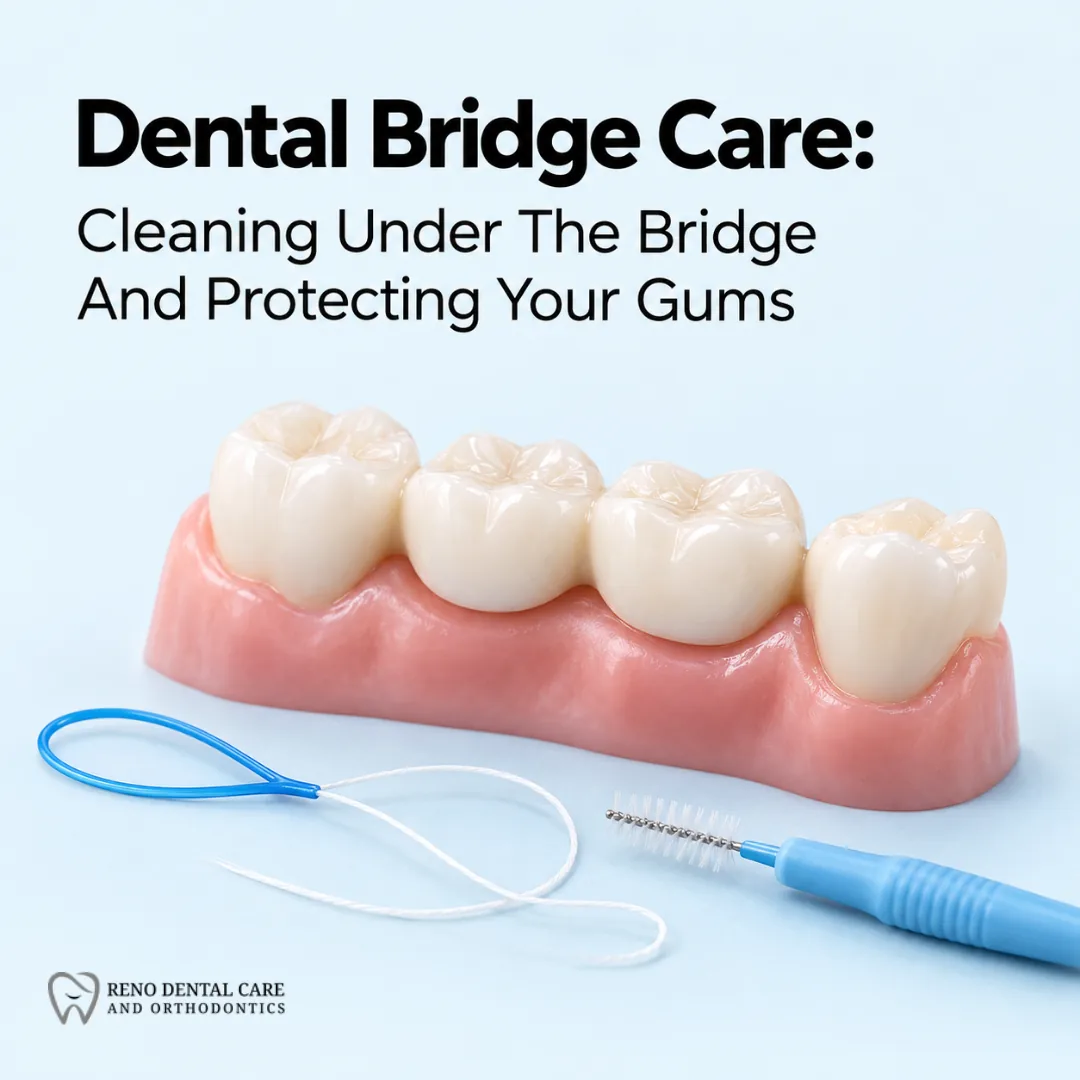
Many people find food gets stuck under a dental bridge. They get bad breath, sore gums, or a strange taste. That pain can make eating and talking feel awkward.
Plaque can build up fast and harm the gums if left alone. Here you will know simple tools and steps to clean under a bridge.
Why Cleaning Under Your Dental Bridge Is Important
Plaque hides under the pontic and attacks the abutment teeth. It causes gum inflammation, bad breath, and can loosen the bridge. Daily flossing and interdental cleaning stop bacteria from piling up. Good dental bridge care protects gum health and prolongs the restoration.
A patient once joked that the space under the bridge was a tiny moat. Regular use of a floss threader, interdental brush, or water flosser clears that moat. Brushing with a soft bristled toothbrush and fluoride toothpaste keeps margins clean. Adding an antibacterial mouth rinse helps control plaque and supports periodontal care.
Keeping your dental bridge clean takes the right gadgets. These help remove food and plaque from tricky spots beneath the bridge.
Floss threaders make cleaning under a dental bridge easier. These handy tools help guide floss where regular techniques might not reach. Users can easily slide the threader through tight spaces, making it simple to maintain oral hygiene around pontics and abutments.
Using a floss threader reduces the risk of gum issues. Flossing becomes more effective with this tool because it helps remove plaque buildup that can hide below the bridge. People who want to protect their gums should definitely consider using these innovative little devices in their daily routine.
Floss threaders make a great start, but interdental brushes take cleaning to another level. These brushes fit between teeth and around dental bridges. They help remove plaque that floss might miss.
Using an interdental brush can be simple and effective. Choose the right size for your gaps; they come in various widths. Many find them easier to use than traditional methods like flossing.
For those with braces or dental work, these brushes serve as excellent tools for maintaining gum health and overall oral hygiene. Just gently slide the brush along the sides of teeth where food or debris hides, especially near pontics and abutments.
Water flossers make cleaning under a dental bridge easier. They use a steady stream of pulsating water to remove food particles and plaque. This method is gentle on gums but still effective for oral care.
Water flossers can reach areas where traditional floss might struggle, especially around a pontic.
Using one can significantly improve gum health and reduce plaque buildup. Many people find water flossers fun to use, turning dental hygiene into less of a chore and more of an enjoyable routine.
These devices come in various models, making it easy to find one that fits your lifestyle and needs. Better gum protection leads directly to better overall oral health; it's worth the effort!
To keep a dental bridge clean, brushing twice daily with fluoride toothpaste works wonders. Flossing around and beneath the bridge helps eliminate stubborn plaque. A quick rinse with antibacterial mouthwash protects gums from bacteria. These simple habits create strong foundations for good oral health.
Brush Twice Daily with Fluoride Toothpaste
Keeping teeth clean is crucial for dental bridge care. Fluoride toothpaste fights cavities and strengthens enamel. Most experts recommend brushing twice daily. This routine helps keep plaque at bay, especially around the pontic and abutment of a dental bridge.
Using a soft-bristled toothbrush makes brushing easier on gums. A first-hand experience shows that people who brush regularly notice healthier gums and fresher breath. It's essential to angle the toothbrush correctly to reach tricky spots under the bridge.
By maintaining this habit, individuals can improve their gum health while ensuring their smile remains bright and healthy.
Flossing around and under the dental bridge is vital for gum health. Small bits of food can hide in those spaces, leading to plaque buildup. A good flosser knows that tackling these areas keeps gums healthy and happy.
Using a floss threader makes this task easier. It allows you to slide the floss around each abutment and pontic comfortably. This routine eliminates debris effectively. Regularly cleaning these spots helps prevent gum disease, keeping smiles bright!
Antibacterial mouthwash plays a vital role in dental bridge care. This type of rinse can help kill bacteria that cause plaque and bad breath. Using it regularly helps keep gums healthy, especially around the abutments and pontics.
A recent study found that people who used antibacterial mouthwash saw 25% less gum inflammation than those who didn’t. That's significant! To get the best results, swish it around for at least 30 seconds after brushing and flossing.
Combining mouthwash with good oral hygiene habits makes a difference in protecting both your bridge and your gums.
Taking care of gums around a dental bridge is crucial for maintaining overall oral hygiene. A soft-bristled toothbrush works wonders here. This gentle tool cleans without harming the sensitive gum tissue. Using fluoride toothpaste adds an extra layer of protection against decay and cavities.
Flossing techniques play a key role in gum health too. The abutments support the pontic, making it vital to clean carefully around these areas. Floss threaders or interdental brushes can reach tough spots easily.
Adding an antibacterial mouth rinse can help fight plaque buildup and soothe irritation. Regular checkups with a dentist make sure everything stays on track, ensuring strong gums and lasting bridges.
Cleaning under your dental bridge is important for gum health. Use a floss threader or an interdental brush to reach that area. Gently slide it beneath the bridge and move back and forth to remove plaque.
Your gums support the dental bridge, so keeping them healthy matters. If bacteria build up, it can lead to gum disease or even tooth loss. Regular cleaning helps maintain strong gums.
Aim to clean under your dental bridge at least once a day. Making this part of your daily routine will help keep plaque away and protect your gums from irritation.
Look for soft-bristled toothbrushes designed for sensitive areas, along with fluoride toothpaste. You might also consider antibacterial mouthwash; it can reduce harmful bacteria in your mouth while freshening breath too!
Tell us a little about what you need — we'll be in touch shortly.
8040 S Virginia St, Suite 1 , Reno, NV 89511

Hi! I'm Tooth fairy! Your AI Assistant Ask me anything