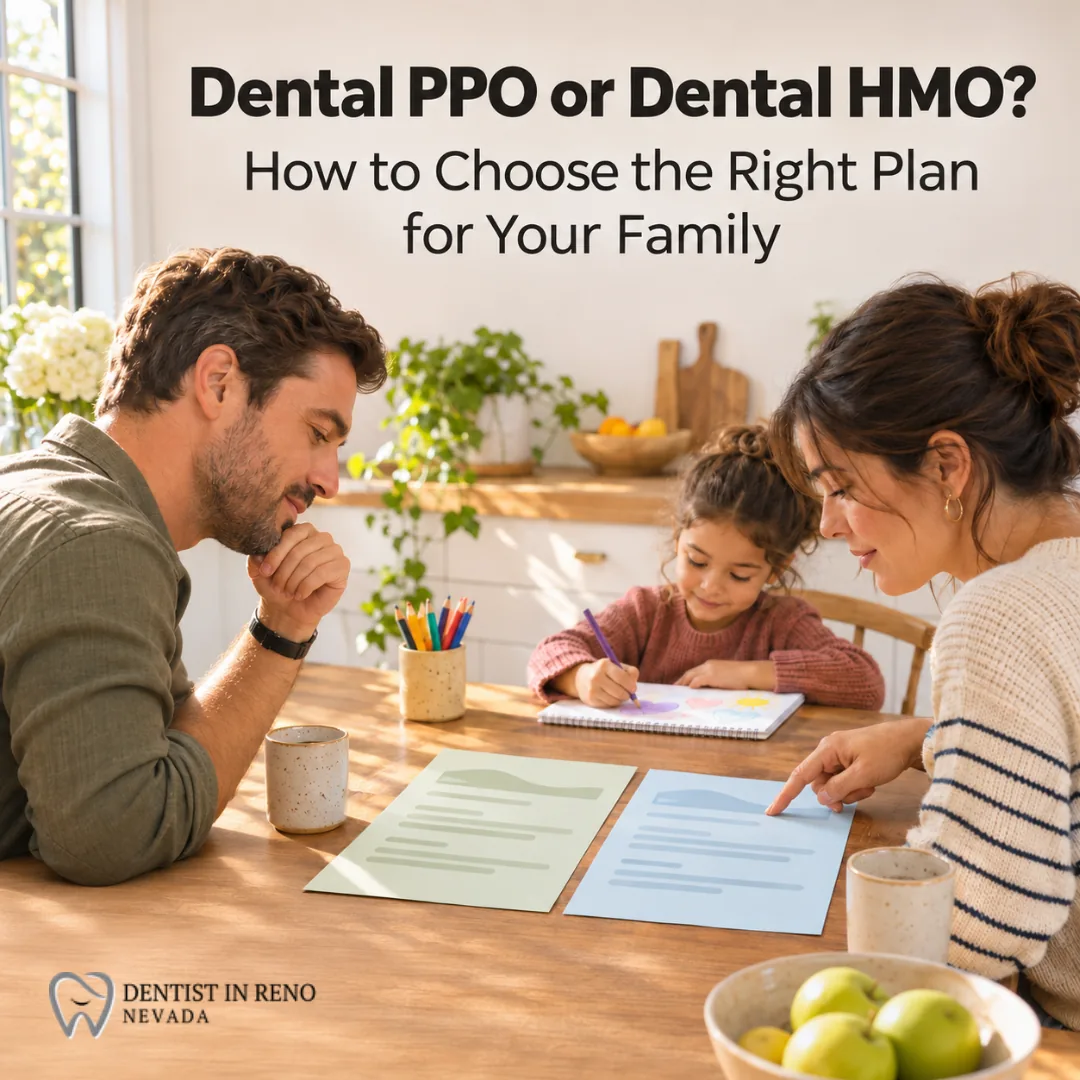
Families often struggle to choose dental insurance. A plan with a low monthly cost may limit their choice of providers. In the DHMO Vs PPO choice, one key difference is provider access. HMO plans usually ask members to use network providers, while PPO plans may cover care outside the network at a higher cost.
Dental PPO and Dental HMO each have their own rules. Understanding these differences helps families find the right fit for dental care.
PPO plans often include a larger group of dentists. Members can usually see out-of-network dentists, but they may pay more. This gives families more choice if they want to keep a dentist they know.
HMO plans usually cover care only from dentists in their network. Members may need to choose a dentist from a smaller list. Referral rules can also affect access to specialists.
A dental HMO may require a referral from a primary dentist before a patient can see a specialist. The rules vary by plan, so families should check which services need a referral.
A dental PPO usually lets patients see a specialist without a referral. The plan may pay more for care from an in-network specialist, while out-of-network care may cost more.
In a plan review, a parent may spot the catch: a lower monthly premium can mean higher costs at each visit.
| Cost | Dental PPO | Dental HMO |
|---|---|---|
| Monthly premium | Often higher | Often lower |
| Deductible | May apply before some care | Often none, but plan rules vary |
| Visit costs | Coinsurance or copays may apply | Set copays often apply |
| Out-of-network care | Usually costs more | May not be covered |
| What to check | Deductible, coinsurance, yearly limit | Copays, covered services, plan limits |
Dental PPO plans offer some great benefits. They let families choose their dentists without many restrictions.
PPO plans offer some great perks for families. These benefits can make dental care easier and more flexible.
Families should weigh these advantages against potential drawbacks as they consider what's best for their needs moving forward into choosing between PPOs and HMOs.
Dental PPO plans offer many benefits, but they also have some downsides. Here are the potential drawbacks of using these plans.
Exploring PPO plans takes some thought, especially when balancing costs with access to care.
Dental HMO plans offer a mix of benefits and challenges. They often focus on preventive care, making visits to the dentist more affordable for families. However, members may have fewer choices when picking providers or specialists.
HMO plans have benefits that many families find appealing. They offer a way to manage dental care efficiently.
Families can appreciate all these features when considering dental coverage options. Next, it's important to explore potential drawbacks of HMO plans as well.
Dental HMO plans have some advantages, but they also come with a few downsides. Families should weigh these drawbacks before making a choice.
Families looking for a dentist should consider these factors carefully when choosing an HMO plan that fits their needs best, keeping in mind that what works for one family may not suit another's circumstances perfectly.
Cost matters a lot when choosing a dental plan. Families should compare premiums first, then look at copays and deductibles.
Families comparing dental plans can start with the monthly premium, then compare quotes for the same household size.
| Plan | Typical monthly premium | What to compare |
|---|---|---|
| PPO | Often higher | Monthly amount for the full family |
| HMO | Often lower | Monthly amount for the full family |
| Example from a family’s quote review | Compare both monthly amounts | Use the same household size |
After comparing monthly premiums, a family can check copays and deductibles to see what each visit may cost.
| Cost detail | Dental PPO | Dental HMO |
|---|---|---|
| Copay | May vary by service and provider | Often a set fee for covered care |
| Deductible | May apply before the plan pays | May not apply to covered care |
| Plan check | One parent may compare fees for in-network and out-of-network care | The same parent may check the copay for each planned service |
| What to confirm | Deductible, copays, and covered services | Copays, deductible rules, and covered services |
Access to care matters. People want easy ways to see their dentist and get appointments when needed.
Finding a dentist is about more than just costs. It's also about where the dental providers are located. Some plans have bigger networks, meaning more choices for families. Others might have fewer options, which can limit access.
Providers could be close to home or far away. People should think about how easy it will be to get to appointments. A long drive can be a hassle, especially with kids in tow. The closer the office is, the easier it is to keep regular check-ups and visits on schedule.
Consider what fits best with family routines and needs; this makes all the difference when choosing between plans.
Finding a dentist can be a hassle. Appointment scheduling varies between plans. In a PPO plan, patients often have more options and flexibility in choosing their providers. They can usually get appointments quickly if they select an in-network dentist.
HMO plans might require longer waits for certain services. Patients may need to see their general dentist first before seeing a specialist. This could add extra time to receiving care.
Some families appreciate the quick access of PPOs, while others prefer the structure of HMOs. It's all about what fits best for each family’s needs and lifestyle.
To know what your family needs, think about how often they visit the dentist. Also, consider any future dental work like braces or crowns that might be on the horizon.
How often a family visits the dentist matters. Most experts suggest every six months for check-ups and cleanings. Regular visits help catch problems early, like cavities or gum disease. These issues can get serious if ignored.
For families with kids, early visits set up good habits. Kids learn about dental care and feel comfortable in the chair. Adults may need to visit more often if they have ongoing issues or special needs.
Keeping track of how many times each family member goes is smart planning for their health needs ahead of time. Next, look into any anticipated dental procedures your family might need.
After thinking about how often the family visits the dentist, it’s time to consider possible dental procedures. Families might expect a range of treatments. Routine cleanings are common for everyone. These keep teeth fresh and healthy.
Some may need fillings if they have cavities. Others might require crowns or bridges for damaged teeth. Orthodontics could be on the list too, especially for kids needing braces. Anticipating these procedures can help families choose a plan that covers their needs best. Understanding what lies ahead helps in planning both finances and care options effectively.
Choosing the right dental plan is important for a family’s health. Families should think about their needs before picking between a PPO and an HMO. A Dental PPO gives more provider choices but comes with higher costs. Many families like the freedom to see any dentist they want without needing referrals.
A Dental HMO keeps things simple and often costs less upfront. However, it requires using in-network providers and getting referrals for specialists. One must consider how often family members visit the dentist or need procedures done.
Knowing these factors can help families select the best option for their unique situation, making sure everyone smiles brightly!
A Dental PPO lets your family visit dentists outside its network, but you may pay more. A Dental HMO costs less, but you usually must see a dentist in its network.
A Dental HMO often has lower monthly costs and set fees for care. A Dental PPO may cost more, but it gives your family more choice. Check the full costs before you choose.
Check each plan’s dentist network before you enroll. A PPO may cover visits to dentists outside its network, though you may pay more. An HMO usually covers care only from network dentists.
Think about your budget, your family’s dental needs, and the dentists you want to see. If you value lower costs and can use a network dentist, an HMO may fit. If you want more choice, a PPO may be worth the extra cost.
Tell us a little about what you need — we'll be in touch shortly.
8040 S Virginia St, Suite 1 , Reno, NV 89511

Hi! I'm Tooth fairy! Your AI Assistant Ask me anything