Many people wake with a sharp twinge or find a dark spot on a molar. They want to save the tooth but fear losing healthy parts. The choice between fillings, inlays, onlays, or a crown can feel like a fork in the road.
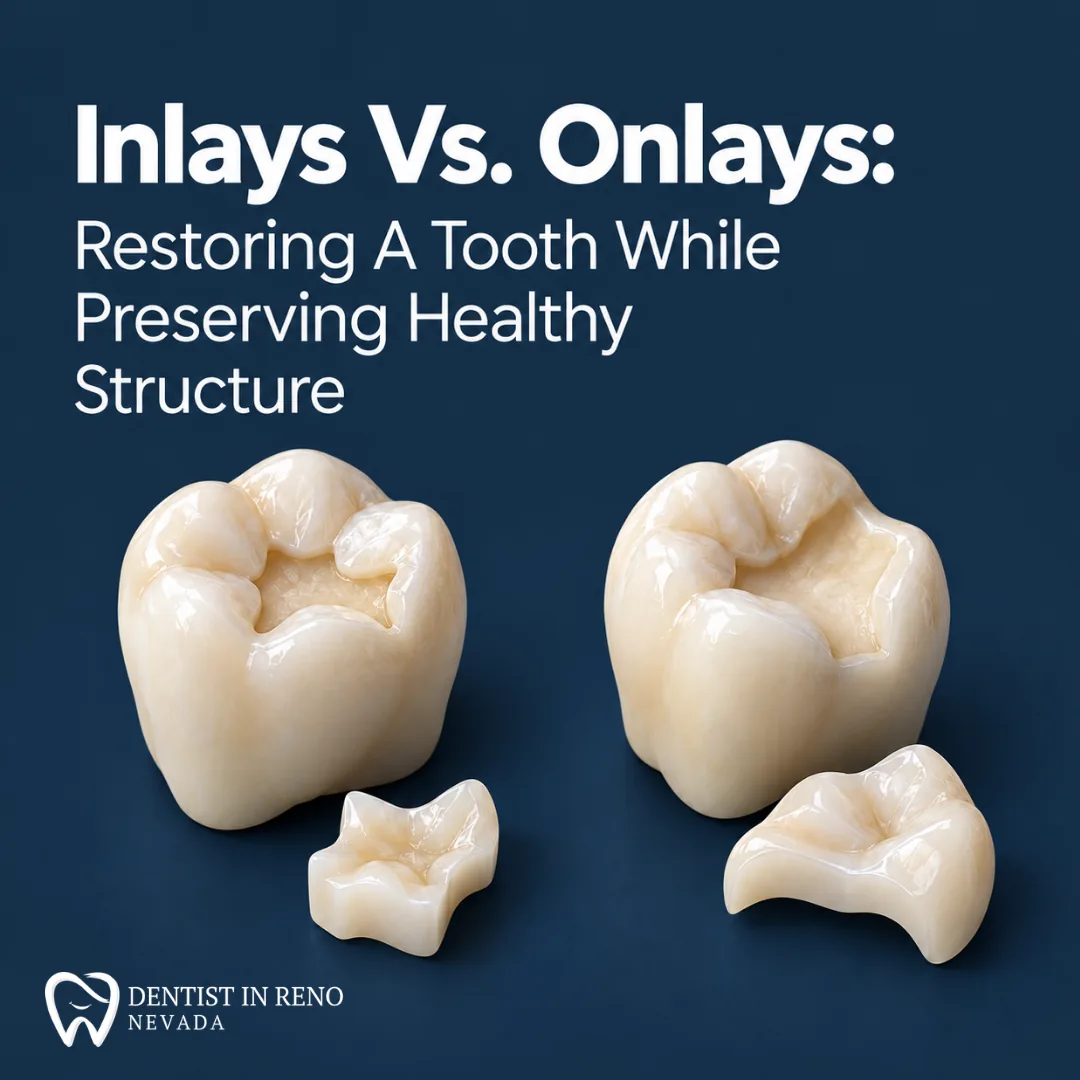
An inlay fits inside the tooth. An onlay covers one or more cusps. Both save more enamel than a crown. Here you will know when each works best, what to expect, and how each protects tooth structure.
This section compares inlays and onlays by coverage and common uses.
| Feature | Inlay | Onlay |
|---|---|---|
| Coverage | Fits within the chewing surface grooves. Covers only the central part of the tooth. Preserves surrounding enamel. | Covers one or more cusps. Extends over the tooth edge. Replaces larger sections of the biting surface. |
| Use Case | Used for moderate decay. Restores broken cusps that do not reach the edge. Saves more natural teeth than a crown. | Chosen for larger damage. Protects weakened cusps. Acts like a partial crown when strength is needed. |
| Preparation | Requires less removal of tooth structure. Keeps healthy enamel intact. Often needs only one dental visit with CAD/CAM milling systems. | Needs more shaping of the tooth. May involve trimming a cusp. Still removes less structure than a full crown. |
| Materials | Made from porcelain, gold, or composite. Porcelain matches tooth color. Gold lasts long for heavy chewing. | Also made from porcelain, gold, or composite. Porcelain blends with teeth. Gold offers durability for molars. |
| Strength and Longevity | Strong for moderate loads. Can last ten years or longer with good care. Bonding improves resistance to fracture. | Stronger for heavy chewing. Can last a decade or more. Covers cusps to reduce fracture risk. |
| When Dentists Choose It | Selected when decay is limited to the center. Preferred to avoid crown placement. Keeps the maximum healthy tooth. | Picked for larger restorations that include cusps. Used to reinforce weakened teeth. Avoids full crowns in many cases. |
| Cost Consideration | Often less expensive than an onlay. Costs vary by material and lab fees. Insurance may cover part of it. | Usually costs more than an inlay. Price depends on extent and chosen material. Coverage varies by plan. |
Dentists next discuss how these options help preserve tooth structure.
After comparing coverage and application, the next part looks at how inlays and onlays guard healthy tooth structure. Dentists remove less enamel than with crowns. Patients keep more original teeth.
Lab-made parts fit precisely. They bond tightly to enamel and dentin. That bond increases strength. A tooth can regain chewing power. Many restorations last 10 to 30 years with proper care.
That span beats many direct fillings. Like patching a roof instead of rebuilding it, these options target the damaged area and spare the rest.
Aesthetics play a big role in patient choice. Ceramics mimic natural enamel color. Labs craft custom restorations to match shade and shape. Biocompatible materials reduce irritation.
Margins seal better than many fillings and lower decay risk. Dentists use inlays for inside cusps and onlays when a cusp needs coverage. The procedures extend tooth life and support long-term oral health.
Patients often report less post-op sensitivity. Over time, fewer replacements and less invasive work save money and preserve teeth.
Choosing between inlays and onlays depends on the damage to the tooth. Inlays fit within the cusps of a tooth, making them ideal for moderate decay or damage. These restorations preserve more healthy structure than fillings do.
Onlays cover one or more cusps and work well for extensive decay. They offer added strength and protection. A dentist will recommend either option based on how much tooth structure remains intact, ensuring effective restoration while maintaining overall dental health.
Getting an inlay or onlay involves a simple process. Patients can look forward to a straightforward experience.
Patients often appreciate how these restorations blend with their natural teeth for aesthetics and durability. Each step aims to preserve healthy tooth structure while effectively treating decay or damage.
To maintain long-term oral health, individuals must focus on various factors. Regular dental check-ups play a vital role in catching issues early. Dentists can spot tooth decay before it becomes serious.
Cleanings help to remove plaque and tartar, which contribute to cavities. Consistent visits keep teeth healthy and gums strong.
Another crucial aspect involves proper home care routines. Brushing twice a day with fluoride toothpaste strengthens enamel, while flossing removes food particles between teeth. Choosing the right diet also contributes to dental health.
Foods high in sugar can lead to decay, while fruits and vegetables promote healthier teeth and gums. Staying hydrated helps wash away harmful bacteria too; water acts as nature’s mouthwash! Each of these practices supports tooth preservation, ensuring smiles last for years to come.
Inlays and onlays are dental restorations. They help repair damaged teeth while keeping healthy tooth structure intact. An inlay fits inside the tooth, while an onlay covers one or more cusps.
Choose an inlay if the damage is minor and only affects the inner part of your tooth. If you have larger cavities or damage that extends to the outer surfaces, go for an onlay instead.
Both can last many years with proper care, often up to 10-15 years or more. Regular dental checkups will help maintain their condition.
One downside is that they may cost more than fillings initially; however, they offer better durability and protection for your teeth over time. Additionally, some people might need a few visits to complete the process but think of it as investing in your smile!
Tell us a little about what you need — we'll be in touch shortly.
8040 S Virginia St, Suite 1 , Reno, NV 89511

Hi! I'm Tooth fairy! Your AI Assistant Ask me anything