
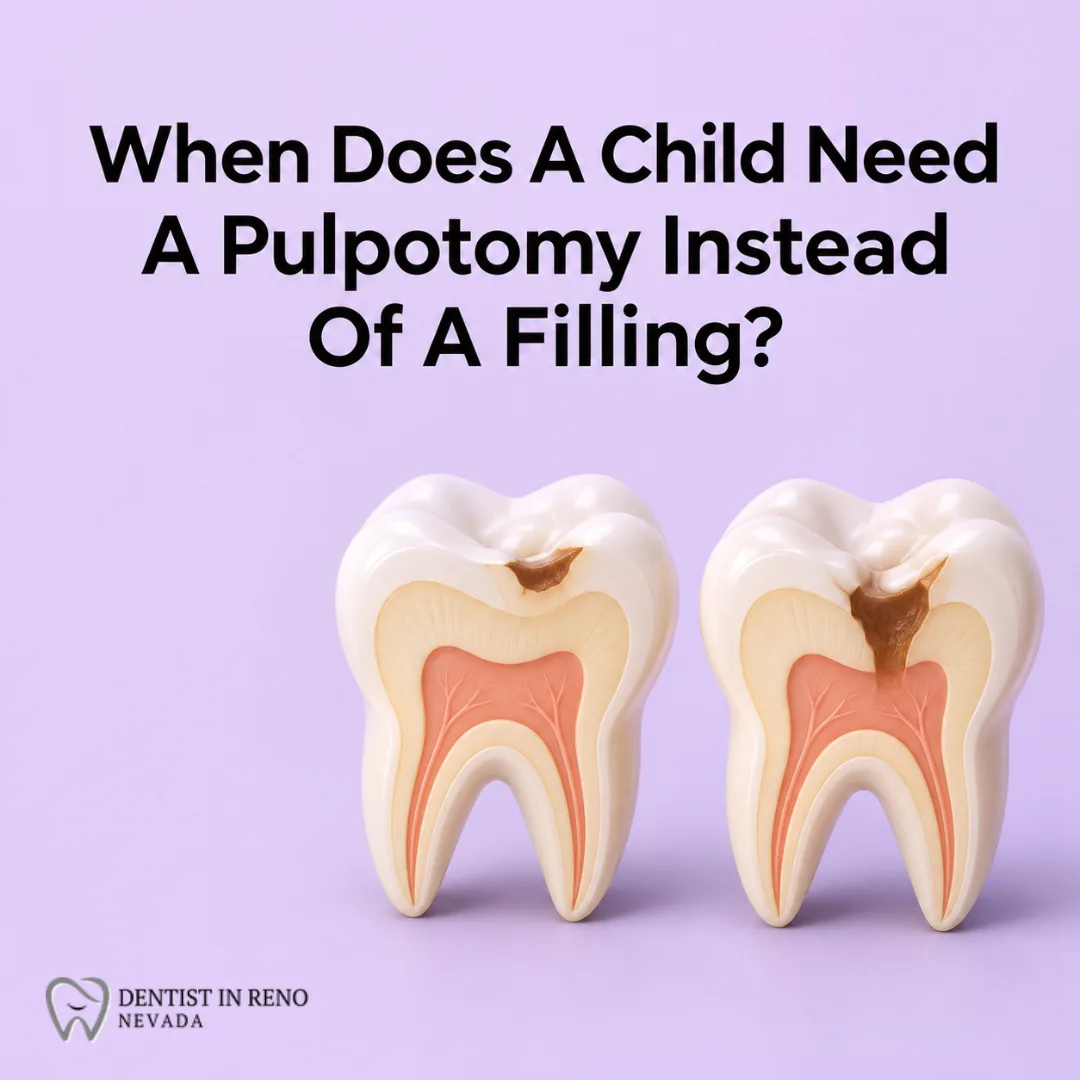
A parent sees a child hold a cheek and cry. They worry about a cavity and wonder if a simple filling will do. Many parents ask when a filling stops working and a pulpotomy becomes the better choice.
A pulpotomy treats decay that reaches the tooth pulp, the soft center with nerves and blood vessels. It saves the baby tooth for chewing and holds space for the adult tooth. Here you will know the signs, symptoms, and what to expect at the dentist.
A dentist often chooses a filling when the cavity is small and hasn’t caused trouble deeper inside the tooth. If your child still chews happily without pain or sensitivity, a simple filling usually does the trick—no superhero capes needed.
Cavities that stay in enamel and dentin need a simple fix. The dentist removes decay and places a filling to stop tooth decay in baby teeth. A pediatric dentist recalled treating a seven-year-old who had no pain and only a small cavity, and the filling restored chewing and kept the tooth in place.
Kids usually feel no severe toothache with those cavities. Parents get a quick appointment and simple treatment, often with local numbing and a one-visit procedure. If the decay reaches the pulp, then pulpotomy becomes the next step.
Tooth decay can start small. If a cavity only touches the enamel and dentin, often a simple filling will do the trick. Kids may not experience any pain or sensitivity at this stage.
Parents might even feel relieved to hear that their child's teeth are safe from infection. A child may complain of toothaches or other problems if things get worse.
In these cases, dentists typically opt for fillings instead of pulpotomies. The goal is to catch issues early and keep those baby teeth healthy until they naturally fall out as part of growing up.
If signs like pain or swelling appear later, it’s time to consider more serious procedures like pulp therapy; parents should remain vigilant about their child's oral health as they grow.
When a child has tooth decay that reaches the pulp, it’s time to think about a pulpotomy. This procedure helps save the tooth when pain or swelling shows up, keeping those little smiles intact and healthy.
Tooth decay or trauma can sometimes reach the tooth's pulp. This situation can lead to serious issues for a child. The pulp houses nerves and blood vessels, making it sensitive to pain and infection.
Signs of this problem include severe toothaches, swelling in the gums, or increased sensitivity to hot and cold foods.
Pediatric dentistry often addresses these concerns with procedures like pulpotomy. Doctors recommend this treatment when cavities threaten healthy tissue. It helps save the baby tooth while keeping pain at bay for the child.
Understanding these signals is crucial as they guide parents toward proper dental care for their little ones. Let’s look more closely at how symptoms affect treatment decisions next.
Pain, swelling, or sensitivity can signal serious problems for a child’s teeth. Kids might complain that something hurts when they eat certain foods or drinks. They may even feel a dull ache in their jaw.
These signs often suggest that tooth decay has reached deeper layers of the tooth. Swelling around the gums or teeth indicates possible infection too.
In these cases, dentists may consider performing a pulpotomy instead of just placing a filling. This procedure helps save the baby tooth from further damage and keeps it healthy while waiting for natural exfoliation to occur.
A pulpotomy keeps the baby tooth healthy. This helps with chewing, spacing, and maintaining a child’s smile.
A pulpotomy helps keep a baby tooth intact. This is crucial for a child's chewing ability and proper spacing in their mouth. Baby teeth hold space for adult teeth to come in correctly. Losing them too early can lead to crowding or misalignment.
With healthy primary teeth, kids can eat without pain or discomfort. This aids oral health significantly. Proper chewing supports overall nutrition as well. Pulp therapy safeguards the pulp tissue inside the tooth from infection and decay, making it easier for children to maintain good oral hygiene practices. Parents appreciate this long-term benefit as it promotes better dental habits for their little ones.
A pulpotomy is a dental procedure that removes the infected part of the tooth's pulp. If decay reaches the pulp, your child may need this treatment instead of just a filling.
Look for signs like severe tooth pain or swelling around the gums. If your child has persistent discomfort, it might mean deeper issues that require a pulpotomy rather than just filling cavities.
Like any procedure, there are risks such as infection or complications during recovery. However, dentists perform this treatment to save teeth and prevent further problems.
Yes! A properly done pulpotomy allows the tooth to remain healthy and functional for years to come. It preserves more of the natural structure compared to simply placing fillings in deep cavities.
Tell us a little about what you need — we'll be in touch shortly.
8040 S Virginia St, Suite 1 , Reno, NV 89511

Hi! I'm Tooth fairy! Your AI Assistant Ask me anything